

Common Visual Changes in People with Dementia

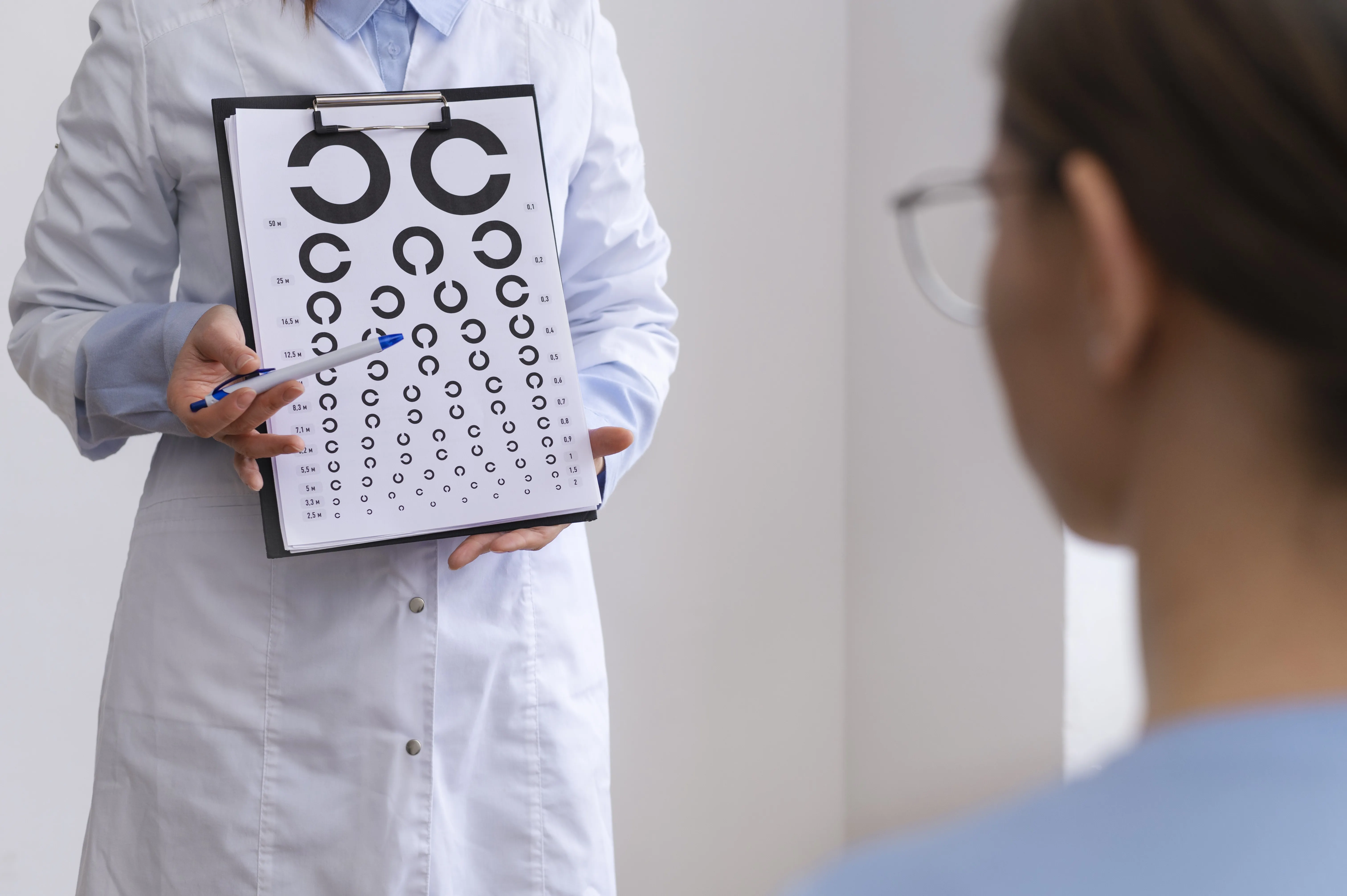

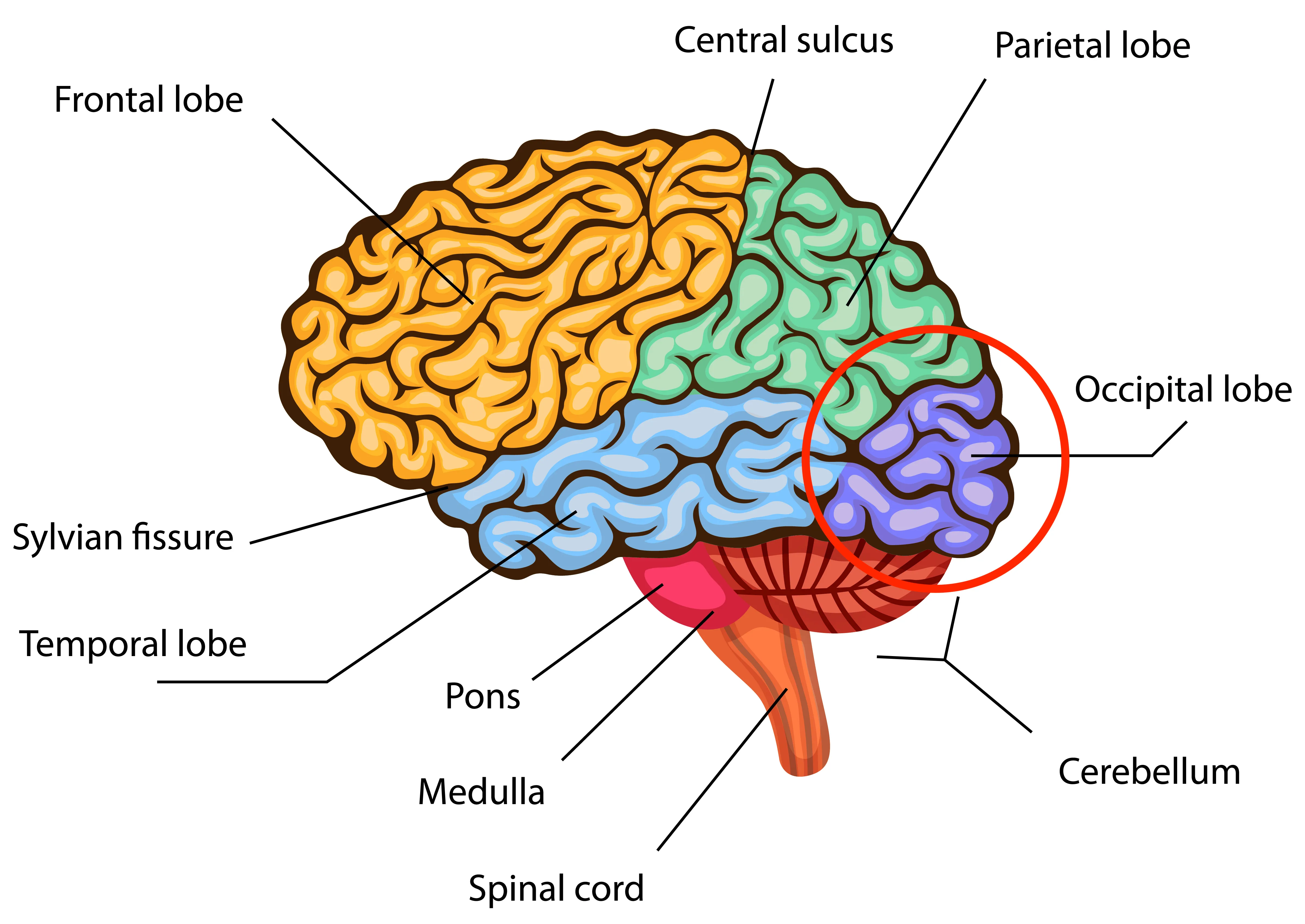
Visual changes are common in people living with dementia. Damage to the occipital lobe is largely responsible for many of the changes we see with dementia.
Here are some of the most common changes:
- Decreased visual acuity in low light
- Impaired depth perception
- Reduced peripheral vision
- Poor color discrimination
- Reduced contrast sensitivity
- Decreased motion sensitivity
- Impaired ocular motor function
- Changes in perception
Visual acuity
Visual acuity is the sharpness of vision. There is some evidence that people with dementia have decreased sharpness of vision in low light conditions. This is one of the reasons good lighting is so important for both safety and function of people living with dementia.
Depth perception
Depth perception is the ability to see objects in three dimensions, differentiate three dimensional objects from flat ones, and judge the distance between objects. For example, when we look at steps, we can perceive the 3D nature of the steps as well as how big of a "drop" or "step up" the next step is. This allows us to adjust our body accordingly and safely negotiate the steps.
People with dementia have impaired depth perception and may have a harder time judging the distance between objects or misperceive change in flooring as a change in elevation, which can pose a big safety concern. Impaired depth perception may also contribute to a person trying to pick dots and patterns off of a plate or carpet. If a person is unsafe to bend, squat, and/or reach, this could pose a potential safety concern as well.
Peripheral vision
Peripheral vision is a term used to describe a person's side vision when looking straight ahead. In people with Alzheimer's disease, inferior and superior peripheral regions seem to be most impacted, but eventually all directions are affected. When a person has reduced peripheral vision, they are more likely to be unaware of their surroundings, to miss objects sitting right in front of them (but too close to the body) or off to the side, to bump into or trip over objects around them, or to startle easy if someone approaches them from the side.
If you cup your hands around your eyes like binoculars, this is similar to what a person with dementia will experience visually as their dementia progresses. At some point, in the later stages of dementia, this may become monocular vision, meaning that they can only see what is directly in front of them about 12 inches in all directions.
Color discrimination
Some people with dementia may exhibit difficulty discriminating similar colors from one another. For example, it may be difficult for the person to tell the difference between black, navy, and dark brown. Some studies have also shown that people with Alzheimer's disease may be more more likely to have a red-green color deficiency where red and green are difficult to distinguish between (as well as a few other color combinations).
Another study found color discrimination performance to be inversely related to MMSE score, meaning that a higher score on the Farnsworth-Munsell 100 hue test (worse color discrimination) correlated with a lower score on the MMSE (the more severe dementia).
Functionally, this may look like unintentionally mismatching clothing items or picking up the wrong toothbrush.
Contrast sensitivity
Contrast sensitivity is similar to color discrimination, but more closely related to the ability to distinguish an object from its background. For example, being able to see the toilet against the wall, being able to see a shirt lying on the bed, being able to see a pill on a napkin.
People living with dementia have a harder time distinguishing objects of a similar color from one another, which makes it harder to locate a desired object. This is why it is so important for the object in question to always contrast with whatever is up against. Contrasting colors improve object visibility.
Motion Sensitivity
Motion sensitivity refers to the ability to determine speed and direction of objects, which is essential to everyday function and navigation. People with dementia may experience a decrease in their ability to detect motion.
Functionally, this may look like difficulty following a TV show, reduced awareness of movement around them, general difficulty tracking fast-moving objects, and a reduced reaction time due to misjudging the speed and direction of objects or people in their environment.
Oculomotor function
Oculomotor function refers to the eyes ability to move. Eye movement problems are particularly characteristic of Lewy body dementia (Dementia with lewy bodies and Parkinson's disease dementia). But, people with other types of dementia such as Alzheimer's disease may also demonstrate impairments in ocular motility and visual attention. For example, saccadic latency (slower reaction time) is prolonged in Alzheimer's disease, which means that they struggle shifting their eyes from one object to another or from an object in an initial position to the same object in a new position.
Functionally, this can look like difficulty reading because they lose their place or skip words, they may even feel like the words are jumping around or difficulty finding objects in their environment because they are unable to scan effectively.
Perception
Perception refers to the ability to perceive things in the environment. People living with dementia can experience changes in perception impacting their ability to understand the world around them. Three common visual perception changes are misperceptions, misidentifications, and hallucinations.
Misperceptions are when a person sees something as something other than what it actually is. For example, seeing a plant as a person is a misperception. Seeing pepper on eggs as bugs is a misperception.
Misidentifications happen when a person has problems identifying specific objects, people, and places, etc. This is often referred to as visual agnosia (difficulty recognizing objects, people, and places, etc.). There are many types of visual agnosias.
Hallucinations are when someone experiences something as real, but it doesn't actually exist in the physical world (a false sensory experience). Visual hallucinations tend to be the most common type of hallucination and are most commonly experienced by people with Lewy Body dementia, but people with other types of dementia can experience hallucinations as well. Hallucinations can also involve any of the senses. A person can have auditory (hearing things), olfactory (smelling things), tactile (feeling things), and gustatory (tasting things) hallucinations.
References:
https://doi.org/10.1111/opo.12220



Leave us a review.
We love hearing from you.
Every review helps us reach and help more caregivers like you.